Wherein Little Mac strikes back against his enemies
.....................................................................................................................................
 |
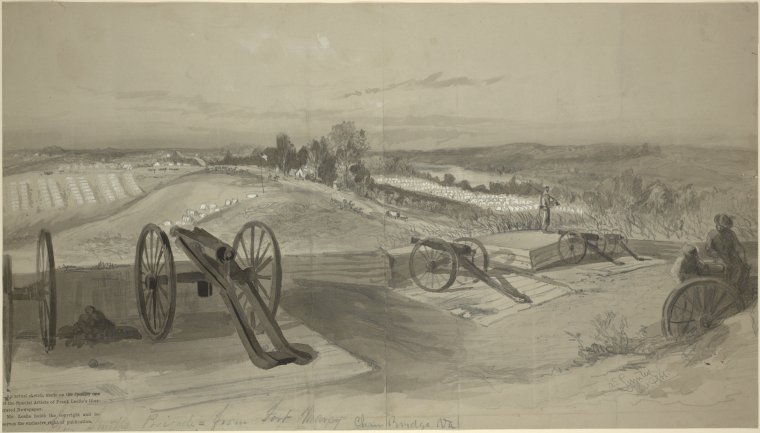
| Long Bridge [14th Street Bridge] across the Potomac |
McClellan was in the midst of a campaign to reassert his authority. Three weeks earlier, he had fallen sick, usually reported as typhoid fever. It couldn't have happened at a less convenient time, for the general. In mid-December there had already been grumbling about the lack of movement by the massive army he had assembled along the Potomac, and the disaster at Ball's Bluff and the winter campaign of Stonewall Jackson in the Shenandoah Valley had stirred up the embers from the pre-Bull Run fire for rapid advance. Without McClellan's boundless energy for political wrangling to quash it, the fire had blazed up fiercer than ever in Washington, fueled by frustrated officers who had been slighted by McClellan's remaking of the army hierarchy.
The Joint Committee for the Conduct of the War was certainly the most prominent organ of dissent. Committee Chair Senator Benjamin Wade (R-OH) and member Senator Zachariah Chandler (R-MI) had interviewed almost all of McClellan's division commanders (the exceptions: Banks and Hooker, furthest away from Washington), attempting to establish a case that McClellan could attack at any time, and simply wasn't. Both men and a growing number of the so-called "Radical" wing of the Republican Party were becoming more and more convinced that this was because of treasonous beliefs among the conservative West Point officers in charge of the war effort.