
Wherein operations along the Potomac begin McClellan's downfall
...............................................................................................................................
At the beginning of this week we looked at the first of two weeks that changed the American Civil War. The fall of Ft. Donelson on the Cumberland River to the obscure Brig. General Ulysses S. Grant had become a challenge to the general-in-chief of the Northern armies, Maj. General George B. McClellan. As Brig. General George Meade, commanding a brigade in McCall's Division (the Pennsylvania Reserves) put it on February 23 in a letter to his wife: "I fear the victories in the Southwest are going to be injurious to McClellan, by enabling his enemies to say, 'Why cannot you do in Virginia what has been done in Tennessee?'"
In the week that followed he had no choice but to begin an offensive motion with his Army of the Potomac, despite his long-laid plans to move it to the Rappahannock River and march on Richmond. The results of that decision changed the war.
February 24, Monday
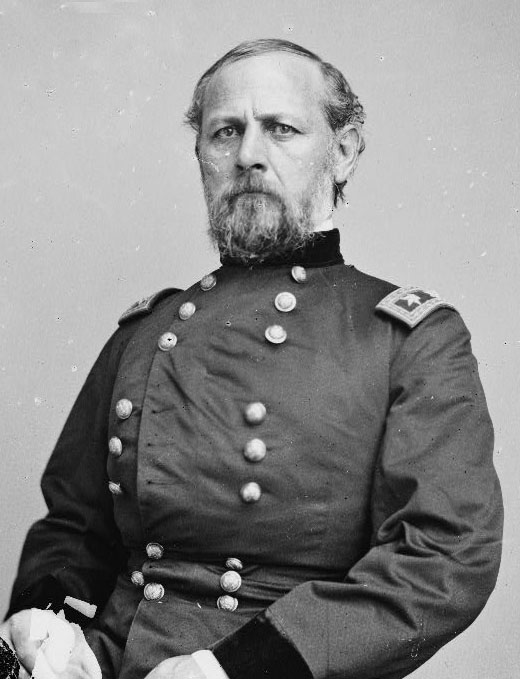 |
| Don Carlos Buell |
He may have gotten Columbia's name wrong, but McClellan's orders set in motion the movement of armies that led to Shiloh, what would be the bloodiest single day in American history until McClellan himself surpassed it at Antietam, and the bloodiest multi-day battle in American history until Gettysburg. The ferociousness of the battle would play a significant role in undermining McClellan's plans for what would become the Peninsula Campaign.

