Showing posts with label Hooker. Show all posts

Wednesday, April 11, 2012

The Anchored Weighed, The Engines Put In Motion

Wherein Hooker misses out [but not really]
...........................................................................................................................................

On April 11, Hooker's old brigade at last arrived in Hampton Roads and were treated to a sequel of March's paradigm-shifting battle. Martin Haynes of Company I, 2nd New Hampshire Infantry, and later the regimental historian, recalled:
As if it had been specially arranged to give the regiment a view of the whole outfit, it was not long before the Merrimack was seen coming down from Norfolk, accompanied by two large steamers and swarms of tugs. It was her first appearance since the famous combat in Hampton Roads, and all was excitement in anticipation of another big fight. Every vessel that could not fight struck out into Chesapeake Bay, while the war ships came in and took position to contest the passage of the rebel fleet.
The whole thing turned out to be a bit of a dud.
As the South America went out, she passed the frigate Minnesota coming in--a gallant show, with her men at the guns and her decks cleared for action; yet, alone, she was no match for the rebel monster, and the hop of successful battle rested with that uncanny little raft and turret [the Monitor] which had once sent the Merrimack crippled, back to her den. A half-dozen shots, perhaps, were exchanged at long range between the Merrimack and the Riprap battery, when the rebel procession headed back for Norfolk and disappeared behind Sewell's Point.
Though not entirely, since the ex-Merrimack captured three merchant ships, events that apparently were not memorable to Haynes, or were at least not in comparison to the lack of battle. The feeling of missing out was probably pretty strong among the New Hampshire men, and not just them but their fellow brigade members.

Reconnaissance on the Potomac (Frank Lesley's Illustrated Newspaper)
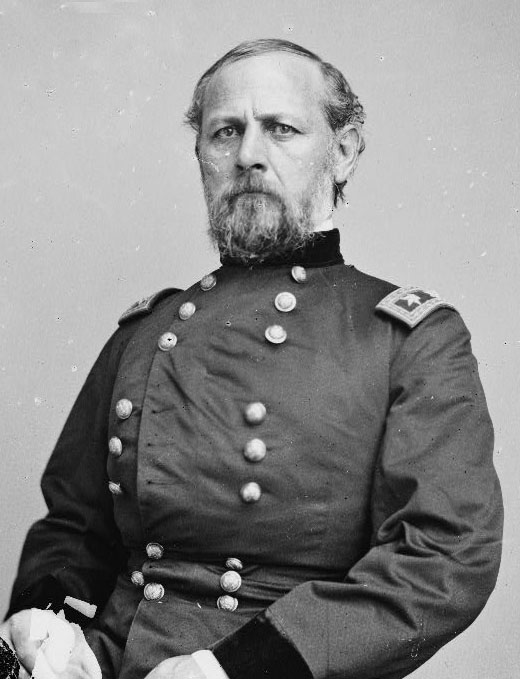
The division of Brig. General Joseph Hooker had spent a cold, isolated winter in Charles County, Maryland, suppressing secessionist inhabitants and plotting to end the activities of a series Confederate batteries that was shutting down traffic on the Potomac. The 2nd New Hampshire had marched there with him as part of his brigade, then been turned over to its senior colonel when Hooker was elevated to command the division that included then-Brig. General Dan Sickles' Excelsior Brigade. A third brigade of New Jersey regiments was added (called the "Second New Jersey Brigade" to avoid confusing them with their more famous brethren commanded by Phil Kearny) about midway through the winter.

Thursday, March 8, 2012

Not Much Choice Between Them

Wherein corps and cracks are formed
..................................................................................................................................


After the Two Weeks That Changed The War the two Armies of the Potomac began moving. Ron over at All Not So Quiet Along the Potomac has done some great stuff about the Confederate preparation and subsequent departure from Northern Virginia, which I will not attempt to duplicate, so make sure you stop over and read it.


 On March 8, 1862, Abraham Lincoln and his new Secretary of War, Edwin Stanton, made a momentous decision--they would overrule McClellan's armies and establish four corps d'armee. French for "body of the army", the grouping of divisions in "corps" had been popularized by the phenomenal success of Napoleon. The units were designed to be armies fully capable of operating independently, but which worked in conjunction within the same theater. But since the 14 divisions of the Army of the Potomac were each larger than any American army previously in existence, the idea was anathema to many Northern leaders.

As usual, the general-in-chief, Maj. General George B. McClellan, lay at the center of what had become a controversial discussion fueled by the Joint Committee for the Conduct of the War. In McClellan's earliest days in Washington, he had stated his intention to form his army into corps. But as part of his systematic effort to remake the U.S. Army in his own image, he had held off on grouping the divisions into corps without explanation. In the meantime, the Joint Committee had caught corps fever, and on February 25 at 8:00 pm, had met with Lincoln in the White House to urge their creation. According to the Committee's report published in 1863:
They made known to the President that, having examined many of the highest military officers of the army, their statements of the necessity of dividing the great army of the Potomac into corps d'armie [sic] had impressed the committee with the belief that it was essential that such a division of that army should be made...The President observed that he had never considered the organization of this army into army corps so essential as the committee seemed to represent it to be; still he had long been in favor of such an organization. General McClellan, however, did not seem to think it so essential, though he had at times expressed himself as favorable to it. The committee informed the President that the Secretary of War had authorized them to say to him that he deemed such an organization necessary.

Friday, March 2, 2012

Two Weeks That Changed the War

Wherein operations along the Potomac begin McClellan's downfall
...............................................................................................................................

At the beginning of this week we looked at the first of two weeks that changed the American Civil War. The fall of Ft. Donelson on the Cumberland River to the obscure Brig. General Ulysses S. Grant had become a challenge to the general-in-chief of the Northern armies, Maj. General George B. McClellan. As Brig. General George Meade, commanding a brigade in McCall's Division (the Pennsylvania Reserves) put it on February 23 in a letter to his wife: "I fear the victories in the Southwest are going to be injurious to McClellan, by enabling his enemies to say, 'Why cannot you do in Virginia what has been done in Tennessee?'"

In the week that followed he had no choice but to begin an offensive motion with his Army of the Potomac, despite his long-laid plans to move it to the Rappahannock River and march on Richmond. The results of that decision changed the war.

February 24, Monday

Don Carlos Buell
The soldiers of Brig. General Don Carlos Buell reached the northern banks of the Cumberland River and looked across into an abandoned Nashville. McClellan's protege would occupy the city, despite the efforts of his (nominal) immediate superior Maj. General Henry Halleck to get Grant there first. Telegraphing his headquarters in St. Louis from Washington, McClellan told Halleck to "cooperate with [Buell] to the full extent of your power, to secure Nashville beyond a doubt." He said he would order Buell to next seize the nearby railroad junction and then "the next move should be either a direct march in force upon the rear of Memphis or else first upon the communications and rear of Columbus."

He may have gotten Columbia's name wrong, but McClellan's orders set in motion the movement of armies that led to Shiloh, what would be the bloodiest single day in American history until McClellan himself surpassed it at Antietam, and the bloodiest multi-day battle in American history until Gettysburg. The ferociousness of the battle would play a significant role in undermining McClellan's plans for what would become the Peninsula Campaign.

Monday, February 27, 2012

Two Weeks That Changed the War

Wherein the reverberations of the capture of Ft. Donelson spur action
..........................................................................................................................................

After months of low-level activity between the two Armies of the Potomac that had resided in the Washington area since summer 1861, the last two weeks of February saw the beginning of a flurry of activity. Rapid-fire decisions led logically to other rapid-fire decisions that set the course of the war for long after both armies left the theater. This is a day-by-day look at those two weeks of decisions made in the Washington area that led to the beginning of the Civil War as we know it.

February 17, Monday

On the day Joe Hooker sat frustrated, waiting for general-in-chief George McClellan to provide the transports needed to make an attack from Liverpool Point in Charles County, Maryland, across the Potomac River to Evansport [Quantico], Washington City was electrified by the details of the surrender of Fort Donelson, on the Cumberland River. The fort had fallen the day before when its Confederate commander (and former U.S. Secretary of War) John Floyd and his second-in-command, Gideon Pillow, had fled on February 16, leaving a disgusted Simon Bolivar Buckner to surrender it that evening to the unknown Brig. General Ulysses S. Grant.

Grant could not say he was unknown on February 17, and all of Washington was titillated to learn that when Buckner had sent asking for terms of surrender, Grant had written back "unconditional and immediate surrender." For those in Washington already angry at Buckner's good pre-war friend McClellan for moving slowly, the contrast couldn't be starker. Grant's control of the fort made Nashville indefensible, McClellan's inaction kept the Confederates in Centreville. Lincoln sent Grant's nomination to major general of volunteers to the Senate that night.

Friday, February 17, 2012

Indisposed to Make It

Wherein Hooker and McClellan don't really help each other
......................................................................................................................

The noose was beginning to tighten around Maj. General George B. McClellan, general-in-chief of the U.S. Army, and commander of the Army of the Potomac. President Abraham Lincoln had clearly become unhappy with the course of the war, appointing a new Secretary of War, Edwin Stanton, and using his commander-in-chief powers to issue a general order for all armies to begin operations by February 22. McClellan was uncertain if Lincoln himself--who McClellan called "the original gorilla" in private, a nickname invented by Stanton a few months before he joined the administration--was the source of the pressure, or if he was responding to the Radical Republicans in Congress, who had convened the Joint Committee on the Conduct of the War to drum out "traitors" from the war effort, a word they considered synonymous with "Democrats". They had already claimed their first victim, Charles P. Stone, who was imprisoned without charge in Fort Lafayette in New York Harbor, but McClellan knew that he was their real target.

In his own Army, there were generals conspiring to replace him. Brig. General Irvin McDowell, who had appeared to see his career as a commander of troops crushed with the loss at Bull Run, was experiencing a resurgence thanks to his willingness to tell the Joint Committee and Lincoln his proposal for a repeat attack on Manassas Junction. Another division commander, Brig. General Samuel Heintzelman, appeared to be in league with McDowell, ordering reconnaissances along his proposed lines of attack. On the distant right, the senior division commander, Maj. General Nathaniel P. Banks, was requesting McClellan allow him to march his division from Frederick, Maryland, to Winchester, Virginia, almost daily, insisting he could bounce the Confederate force under "Stonewall" Jackson out of the Shenandoah Valley with virtually no losses. To the right of Banks, Brig. General Frederick Lander had been making similar requests with such impertinence that McClellan ordered Banks (through whom his messages were routed) to tell him that the general-in-chief "might comment very severely on the tone of his dispatches, but abstain[s]."

And worst of all for McClellan, other generals were winning successes that he didn't seem able to convince Lincoln were thanks to McClellan's leadership in Washington. His old friend Ambrose Burnside had seized Roanoke Island in North Carolina, providing another base from which to threaten Gosport Shipyard [Norfolk Naval Shipyard], the home port for the new ironclad the Confederates had built out of the scuttled remains of the U.S.S. Merrimack. McClellan might have been due some credit for that operation, but the success in Tennessee against Fort Henry and Fort Donelson by troops under the ultimate command of McClellan's top rival, Maj. General Henry Halleck, looked ominous for Little Mack's tenure.

McClellan had to somehow satisfy Lincoln's insistence, without sacrificing his grand scheme to transport the Army of the Potomac to the Rappahannock and march on Richmond directly. He would need at least a month for the troop ships from Burnside's expeditions to return in order to ferry another army. For McClellan, Joe Hooker provided the solution.

Saturday, January 28, 2012

The Deadline

Wherein Lincoln sets deadlines, luckily for Hooker
................................................................................................................................

Gen. Order No. 1, with quotation highlighted (LOC)
On January 27, 1862, President Abraham Lincoln decided it was time to stop waiting for his general-in-chief's report on how the nation's army would take to the field. Maj. General George McClellan had promised Lincoln such a document when he wrested control of the war strategy back following his sickness. But the report hadn't come. And so Lincoln issued an order to attack using his Article II power as commander-in-chief:
Ordered that the 22nd day of February 1862, be the day for a general movement of the Land and Naval forces of the United States against the insurgent forces.
The order didn't specify which movements, though, which Lincoln expected McClellan to fill in.

But McClellan's plan was probably not complete. Assuming that the Confederate forces around Centreville numbered at least 150,000 in fixed positions, he wanted to use the Rappahannock River to split his opponents off from Richmond and either take their capital or induce them to attack him in a strong defensive position. That much had been conveyed to Lincoln by his loyal surrogate, Brig. General William B. Franklin. But the actual plan of operations was still known only to McClellan, and it was this that Lincoln hoped General Orders No. 1 would elicit (as well as the plans for other theaters).

But even if McClellan wasn't providing plans to the President, plans were being made. On the same day, Brig. General Joseph Hooker responded to an inquiry from McClellan's adjutant general, Seth Williams, about his thoughts on the best way to attack. Hooker had been in Southern Maryland's Charles County since late October, suppressing the region's trade of goods and information with the Confederacy and keeping an eye on the batteries at Evansport [Quantico]. But Hooker was an ambitious man, and he had plotted how he could turn his lonely post on the extreme right of the army into a way to crush the Confederate army.

Thursday, January 12, 2012

Unusual Preparations

Wherein the USS Pensacola attempts to run the Potomac blockade
....................................................................................................................................

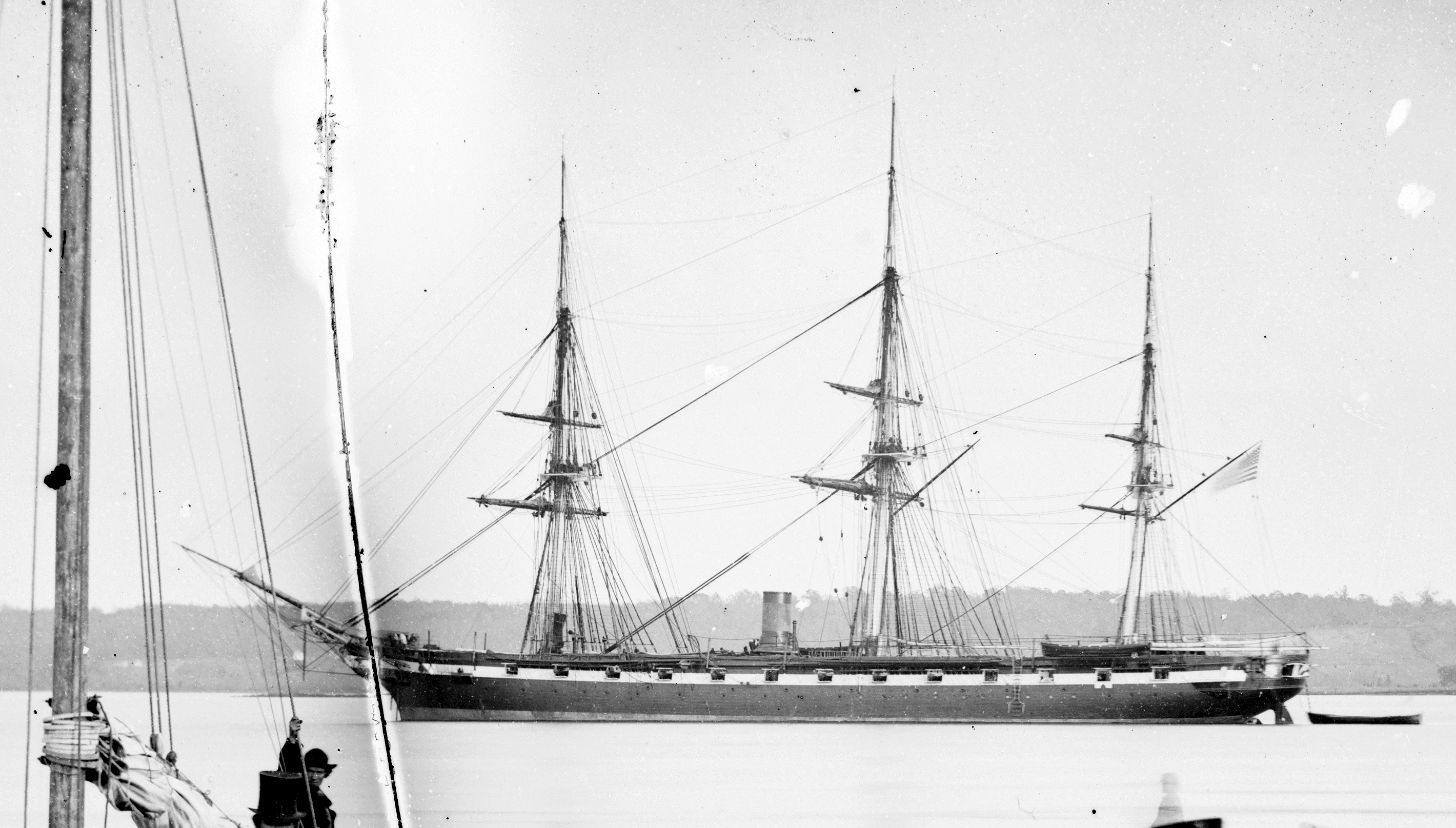
The Pensacola moored at Alexandria in 1861

In the post-midnight blackness of January 12, the U.S.S. Pensacola slipped her mooring, and Captain Henry W. Morris and his sailors prepared to run the gauntlet. Morris had received his instructions four days earlier--from Secretary of the Navy Gideon Welles himself--ordering him to take the 3,000 ton screw steamer to Fort Monroe in Hampton Roads, where he would then be ordered south to the Gulf of Mexico to blockade New Orleans and other ports there. "It is important that every precaution should be made to pass the Rebel batteries on the Potomac with safety to the vessel and those under your command," Welles had written Morris. "The Department relies upon your skill and upon such means as your judgment may dictate to accomplish this object."

Since November, Confederate batteries along the lower Potomac in Prince William and Stafford Counties had made traffic to the capital by river too risky. A single shot from the large guns in the right place could send any ship to the bottom with a fiery explosion. The Pensacola was one of the Navy's top ships in 1862 and was needed to stem the tide of Confederate trade in the Gulf states.

Unlike the hodge-podge of ships that made up the local Potomac Flotilla, the Pensacola had been built by the Navy for warfare, and had been completed in late 1859, only just before the war. She had been laid up in the Washington Navy Yard for two years while additional machinery was installed, and had only been fully ready in September 1861. She had then sat off Alexandria, drilling her crew, and waiting for orders, which were delayed because of the lack of any ports to which she could return for supplies and repairs in the American South. Around the turn of the year, Welles decided to utilize Key West as a base for the Gulf Squadron, since its Southern-sympathizing residents had failed to evict its garrison, and set to work building it.

The Pensacola was a natural fit. She wasn't the fastest, able to make nearly 10 knots, which was good for its day, but with her steam screws she could do it in all weather, if required. She also carried 16 9-inch Dahlgren guns, at the time a massive broadside, each of which required 16 men to operate and could fire a 90-pound shot (though they more often fired exploding shells). By comparison, this was twice the amount of weight that could be fired by the 52 cannons on the vaunted U.S.S. Constitution (only taken off active battle stations in 1855). To cap it off, the Pensacola was equipped with a singe 11-inch Dahlgren gun that pivoted, and could fire a massive 166-pound shot almost two-thirds of a mile.

To get this warship there, however, Morris was going to have to navigate down the Potomac in darkness, past the Confederate batteries. The Pensacola drew 19 feet of water, meaning she had to stay within a very narrow pathway or risk running aground and making an easy target for Confederate gunners. To prepare, Morris moved his ship to White House Point, part of the already historic Belvoir plantation of the Fairfaxes [now part of Fort Belvoir] and anchored at low tide. The first battery he had to pass was at Cockpit Point, on the bluffs above the north side of Quantico Creek. The channel ran close to the bluffs, in those days, making it necessary to slip by after the moon had set, but Mattawoman Creek, which emptied into the Potomac on the Maryland side just north of Cockpit Point, dumped (and still does) massive amounts of silt into the river, creating dangerous mud flats that could ruin Morris's ship.

Wednesday, December 14, 2011

Ice on the Potomac

Wherein either Hooker exaggerates or global warming is real
........................................................................................................................................

The cold weather of December had brought a warming, rather than a cooling of tensions on the Lower Potomac. From the headquarters of the Department of Northern Virginia in Centreville, General Joseph E. Johnston was preparing his Southern army for a battle that he expected, even this far into the winter. While winter campaigning was something that no army enjoyed, it certainly wasn't unusual. Writing to his subordinate commanders about the situation, Johnston would have been well aware that Union forces were on the offensive in the Western Virginia mountains and that Brig. Gen. Thomas "Stonewall" Jackson was playing a cat and mouse game with two Union forces in what is today the West Virginia panhandle.

On December 5, Johnston had written to Brig. Gen. William H.C. Whiting, commanding his right flank at Dumfries about the eventuality of an attack by the Union army and his plans for a Confederate response.
My Dear General... I want to know precisely what roads are open and which closed. Please inform me The enemy's movements might be such as to tempt me to go in your direction first. It is necessary to be prepared to do so at all events... Should we go against your enemy it ought to be in two columns on those two routes. 
And, referring to the way he had tricked Union Maj. Gen. Robert Patterson before Manassas into thinking his army was at Winchester when it was in fact on the way to turn the battle's tide, he added a line that would have brought a shout of triumph to Professor Thaddeus Lowe: "The infernal balloon may interfere with such success as we had with Patterson."

Meanwhile, Johnston was also in a letter battle with Richmond over orders issued by Secretary of War Judah P. Benjamin that he immediately create two brigades of only Mississippi troops, which Johnston scornfully refused to do in several hundred words, especially because two of his Mississippi regiments were with Whiting.
The forces as now arranged are perfectly familiar with their respective positions, officers and men have become accustomed to each other, are acquainted with the nature of the ground they occupy, &c. The execution of Orders No 252 would work a complete revolution in the organization of the army, and necessitate a change of position of all the regiments from Leesburg to Dumfries, and from this position to Dumfries and Leesburg. Should the enemy attack us whilst these changes of station are in process, an event by no means improbable, it would be almost impossible to avert disaster to our arms.
Benjamin, naturally, wrote back expressing President Jefferson Davis' "desire" that Johnston should simply send the 13th, 17th, and 18th Mississippi regiments from Leesburg (where they had been crucial at Ball's Bluff) to Whiting as reinforcements, "to whose brigade they belong". Johnston could then move any other brigade to take their place at Leesburg, never mind that the last major troop movement at Leesburg had prompted a battle.

Tuesday, November 22, 2011

Reinforcing the Lower Potomac

In which we swing by Budd's Ferry and Evansport
...................................................................................................................................

Not a long post today, just a quick stop by the opposite sides of the batteries on the Lower Potomac that were impeding traffic to Washington City. In Maryland, at Budd's Ferry, was the headquarters of Joe Hooker, nominally in command, but having a tough day, apparently:

Headquarters Hooker's Division, Camp Baker, Lower Potomac, Maryland, November 22, 1861. Brig. Gen. S. Williams, Assistant Adjutant-General, Army of the Potomac: 
 General: An animated fire was kept up from the rebel batteries on two or three schooners descending the river this afternoon with no better success than heretofore. The rebels will certainly abandon their purpose of claiming the navigation of the Potomac by means of the batteries now in position ere long. They must see that it is labor in vain. Of late a large number of vessels have passed and repassed at night, and no effort has been made to check them. Thus far their labor has been equally fruitless during the day.
Professor Lowe has not returned from his mission to Washington. I see no effort making to inflate the balloon on shore, as was intended by him at the time of leaving.
The two companies of cavalry dispatched to the lower part of the Peninsula have not returned.
Very respectfully, your obedient servant,
JOSEPH HOOKER, Brigadier-General, Commanding Division. 
Hooker had been having trouble with his second-in-command, Dan Sickles, who would give orders without notifying him--if he was even present in Maryland. Thaddeus Lowe and his balloons happened to be Sickles' find, so it's probably not surprising that he was off on his own agenda. Hooker's mood would brighten the next day when McClellan announced that he would be adding a third brigade to his division, one of all New Jersey regiments that called itself the Second New Jersey Brigade, under Colonel Samuel Starr.

Sunday, November 13, 2011

Rec'd: Etiquette & Personal Dignity

In which we go through some of my favorite recent articles
.......................................................................................................................................................

Harper's Weekly failed on cartoons this week, but here's a lovely picture of Massanutten Mountain in the Valley
November 13, 1861 is the anniversary of one of the most famous incidents of the early war, McClellan's snub of Abraham Lincoln. Here is the story, as told by Doris Kearns Goodwin in Team of Rivals (p. 383):
On Wednesday night, November 13, Lincoln went with Seward and Hay to McCellan's house. Told that the general was at a wedding, the three waited in the parlor for an hour. When McClellan arrived home, the porter told him the president was waiting, but McClellan passed by the parlor room and climbed the stairs to his private quarters. After another half hour, Lincoln again sent word that he was waiting, only to be informed that the general had gone to sleep. Young John Hay [Lincoln's secretary] was enraged... To Hay's surprise, Lincoln "seemed not to have noticed it specially, saying it was better at this time not to be making points of etiquette & personal dignity."
No record exists in McClellan's own accounts or among his letters (in fact, there was no letter to Mary Ellen that night), so no explanation for the behavior. McClellan was particularly critical of his men drinking alcohol, but because of the effect on discipline, not out of any tee-totaling principles, so maybe he had enjoyed the wedding too much. On the other hand, of the many criticisms of George McClellan that exist, the frequent general-bashing accusation of "drunkard" is not one. Whatever the reason for the slight, it might have remained overlooked if McClellan had been on better behavior later on.

All Not So Quiet follows up on who led Longstreet's Brigade after Longstreet moved on to lead a division (hint: it's Dick Ewell) and checks in on the Vermont Brigade encamped at Lewinsville, the sickliest brigade in the Union army.

Disunion checks in on Cump Sherman, who was on leave from the army in November, possibly from a mental breakdown, and covers the big national and international story, the Trent Affair.

The Confederate battery at Evansport [Quantico] made due with the artillery they were able to scrounge up, but To The Sound Of The Guns ventures south to Georgia to look at what a real Confederate coastal defense position would be armed with.

And Joel Achenbach of the Washington Post blogged and wrote about Ball's Bluff, just like the Evening Star did 150 years ago. Well maybe not just like.

How can we close without a little bit of Hooker? Before McClellan headed off to his wedding, he would have been advised by his adjutant of a report from the commander of his extreme right-wing, Brig. General Joe Hooker. The report was even thicker than usual for Hooker, because it contained the report of the 74th New York Infantry's expedition to Mathias Point on the Virginia side of the Potomac. Colonel Charles Graham had taken about 400 men from the regiment and transported them on the Island Belle and Dana, two ships from the Potomac Flotilla, during the night of November 9.

Graham and men had shot some pickets and captured some Confederate prisoners, while at the same time determining that no batteries had yet been erected at Mathias Point (though they thought they saw evidence of preparations to make some). They then returned to the north shore in triumph. But the unusual thing is that Hooker had no idea this raid was taking place.
I inclose herewith the report of Colonel Graham of his descent on Mathias Point, as it contains reliable information of the condition of that much talked of point. The expedition was projected without my authority or even knowledge. As it appears to have had no unfortunate sequence so far as I have learned, I shall not censure him, but in future no operations will be projected without my sanction; otherwise my command may be dishonored before I know it.
Hooker probably knew that the expedition had been planned by his subordinate and Graham's superior, Dan Sickles. Unfortunately for the army, making dangerous military moves without informing his superior would become a habit for Sickles.

Friday, November 11, 2011

John Dahlgren and the Union Aircraft Carrier

Wherein we go afloat and end up aloft
...........................................................................................................................................

Map of Rebel batteries (left) on the Potomac River, beginning of November
"Between 9 and 11 o'clock a.m.," Brig. General Joe Hooker informed the Army of the Potomac headquarters on November 11, "some of the rebel batteries were in active operation."
Three schooners passed up the river under a six knot breeze without the slightest injury, although thirty-seven heavy guns were discharged to dispute their passage. The crews seemed to entertain a just appreciation of the batteries, for they sailed along with as much unconcern as they would to enter New York Harbor. They do fire wretchedly. Whether it is owing to the projectiles or to the guns I am not informed. Several of the pieces are rifled, but they seem to throw more wildly if possible than the smooth bores. From what was witnessed to day and on previous occasions, I am forced to the conclusion that the rebel batteries in this vicinity should not be a terror to any one.
Despite Hooker's conclusions, he had been sent there two weeks earlier in order to work with the U.S. Navy's Potomac Flotilla to eliminate the potential threat that the batteries caused to Union shipping. At the order of the Secretary of the Navy, Gideon Welles, river traffic had been reduced to a fraction of the usual shipping required to sustain the capital, and almost all supplies were coming down the B&O Railroad from Confederate-sympathizing Baltimore.

Hooker knew a good thing when he had it, though, and was content to ride out the winter with his division over a day's march from Washington and therefore from George McClellan, his staff, and anyone else who might outrank him. Not nearly as content with his situation was Commander Thomas Tingey Craven, the head of the Potomac Flotilla. As early as October 23, Craven had declared the mission of the flotilla to control the river a lost cause and suggested removing the guns from his ships and setting up batteries on the Maryland side that could exchange fire with the Confederates (his plan was partially put into action, the guns from the Pensacola had been used by Hooker to establish his one operating battery at Budd's Ferry).

"Feeling that my position here in command of the flotilla can be of no further benefit," Craven wrote Welles, "I most respectfully request to be detached from the command and appointed to some seagoing vessel."

Tuesday, November 8, 2011

Early Returns

In which we celebrate Election Day at a secesh BBQ
..........................................................................................................................................

Brig. General Joseph Hooker had settled his small division well into their positions along the Lower Potomac in Maryland by November 8. Hooker called his headquarters at Chickamuxen Church "Camp Baker", after the Senator from Oregon killed in battle who had given Hooker his first break during the war, and had occupied himself with establishing an efficient military camp there for his old brigade and down the road for the other brigade in the division, that of Dan Sickles'. He detailed it all in his long daily reports to Maj. General George McClellan, through his adjutant, Seth Williams.

The November 8 report is typical of Hookers' reports, which collectively form a remarkably complete picture of the daily activities of a division commander on detached duty (and should surprise those of used to depictions of Hooker as a self-seeking bungler with their above-average competence). In it Hooker reports the establishment of a new hospital at Camp Baker, which he hopes will deprive men of an excuse to escape work by traveling all the way back to the old hospital at Camp Union in Bladensburg. He also complains about the discipline of Sickles' Brigade, a nearly daily occurrence (though he doesn't hesitate to criticize his old brigade in earlier reports).

But Hooker's movement down the Potomac was not to establish a camp further from the city, and his report reflects that. Part of his objective had been to establish control over a population that was known to be Confederate-sympathizers, if not outright Confederates. It certainly hadn't been lost on Hooker or McClellan, or anyone in the War Department or White House that Hooker would arrive just in time for the first Wednesday of November, the date of Maryland state and local elections.

On November 2, he had received orders through Seth Williams with regards to the election. Hooker's reply carefully specifies that he will use his cavalry "to preserve quiet and good order, and to suppress any coercion or intimidation on the part of the secession leaders." But he and his superiors in Washington were intimately aware that the 1861 elections in Maryland would seat a state legislature that would again take up the topic of secession. The president had already authorized suspension of the writ of habeas corpus and Fort McKinley in Baltimore Harbor was already stocked with Southern-sympathizing Maryland politicians, including the mayor and police commissioner of Baltimore. But it was imperative for the defenders of Washington to ensure that the new Maryland legislature didn't move towards secession.

Wednesday, November 2, 2011

Seeing the Old Man Off

Wherein we bid farewell to Winfield Scott
...............................................................................................................................

Harper's Weekly cover announcing the retirement of Winfield Scott. A depiction of the last Cabinet meeting.
Before dawn on November 2, in the midst of a heavy rainstorm, retired Bvt. Lt. General Winfield Scott left his headquarters on F and 17th Street near the White House and rode to the B&O Railroad Station, located at the site of today's Union Station. It was still dark, and Scott was trying to leave town before anyone had time to call on him about his retirement the night before. The New York Times recorded:
A drenching rain was falling at the time, and this fact prevented Gen. McClellan and staff, with an escort of cavalry, from accompanying him on the route thither. A numerous assemblage, in view of the hour and the unpropitious state of the weather, had gathered at the depot, among whom were nearly a dozen ladies.
His staff accompanied him; Colonels George W. Cullum, Henry Van Rennselaer, and Edward H. Wright, all aides-de-camp to Scott, and his chief of staff, Colonel Edward D. Townsend. All four were career military men who had enjoyed many years of good fortune under the longest-serving commander of the Army in U.S. history (a record that still holds) and who had earned the respect and praise of the man now leaving in the middle of a gloomy downpour. His replacement would also be his arch enemy, who the Scott staffers had spent the last three months helping the old general attempt to thwart. Their futures were bleak, and it would take the fall of McClellan to fully rehabilitate their army careers.

Monday, October 31, 2011

Hooker On The Lower Potomac

Wherein you realize you've been duped again by "hooker" in the post title
......................................................................................................................................

It's been a busy weekend for your blogger, so a post light on effort in the meantime while he puts off a longer post on the latest Beauregard-Davis bru-ha-ha. It's the October 31 report by Joe Hooker that is interesting for two reasons. First, Hooker describes his success at setting up a temporary battery with Parrott guns commanded by Lt. Colonel George W. Getty. The guns are much too small to be an effective battery to control the Potomac, but as you will read, Hooker still had fun with them. Second, it provides a sense of the attentiveness Hooker always paid to care for the men in camp. Unlike many generals of his day, Hooker had very modern scruples about things like cleanliness and nutrition, and units he lead always had better health than their fellow units. Additionally, the mistakes about rations is part of a larger scandal that would come to a head in January.

In the Southern camp, acting Secretary of War Judah P. Benjamin spent October 31 meddling in the affairs of Joe Johnston's army again. This time, it was a communication directly to Maj. General Earl Van Dorn, who Johnston believed commanded a division in Maj. General G.W. Smith's Second Corps, and who Benjamin believed commanded the First Division in Johnston's corps-less army. Van Dorn was an old Mississippi friend of Jefferson Davis, who the provisional President had asked to train the Confederate cavalry, and subsequently promised could command all the cavalry in Johnston's army as well as infantry. Johnston didn't like the idea based on two principles: 1) that the cavalry was dispersed for scouting duty and therefore a major general would effectively command no more than a brigade of infantry and, 2) that Jeff Davis should keep his nose out of Johnston's army.


And there's one other major thing that happened on October 31, but you're going to have to wait until tomorrow so I can do that one justice.

Friday, October 28, 2011

Miserable Marksmen

Wherein Hooker is sent to end the "blockade" of Washington
...............................................................................................................................................

Scene of Northern ships running the gauntlet on the Lower Potomac, from Harper's Weekly

Brig. General Joe Hooker must have been gratified. After months of trying to join the army despite an old grudge held by general-in-chief Winfield Scott, followed by months of parades and organizing under the finicky eye of the Union Army of the Potomac's George McClellan, he had finally embarked on some real soldiering. His division had been tasked with defending a mighty bend of the Potomac River, stretching clockwise from Port Tobacco to Pomonkey Creek, on the Maryland side.

McClellan's primary concern was the battery at Evansport [Quantico] and its companion across Quantico Creek at Shipping Point, that had recently shut down river traffic to the capital. The channel of the Potomac at that point in the river winds close to the Virginia side, which put any ships sailing for Georgetown or Alexandria City right under the guns of the Confederates, including, according to the historian of the 1st Massachusetts, a state-of-the-art 7-inch Blakely muzzle-loading rifled cannon purchased from England. The weapon could fire a 120-pound projectile with stunning accuracy, assuming its operators could use it correctly. In the opinion of the New Englanders, they weren't:
High hills on the Maryland side afforded the troops an excellent observatory wherefrom to watch the firing; and, as the rebels, it seemed, had plenty of powder and ball to expend, twenty-four hours seldom passed but they afforded observers an opportunity to observe what miserable marksmen they were.

Wednesday, October 26, 2011

Stars, Falling and Rising

Wherein an extinguished political career helps launch a newspaper's
......................................................................................................................................
Ad for Baker's Philadelphia funeral march,
November 7, 1861


The newspaper of record in Washington City in 1861 was the Evening Star, sometimes called the Washington Star outside of the city, a name it wouldn't take officially until 1970s and would keep until it closed in 1981. Its presses and building (and the contracts of many of its staff, including Mary McGrory, Howard Kurtz, Fred Hiatt, and Jonathan Yardley, as well as rights to those soap comics that still run) were purchased by the Washington Post. The building at the corner of 11th and Pennsylvania now houses Fogo de Chao, among other tenants, but the paper's original 1861 building stood across Pennsylvania Avenue. The paper was small and new then, it had only been in operation for ten years, but the boom in population in Civil War Washington would build the paper, and the evolving, sensational news surrounding Ball's Bluff and the death of sitting U.S. Senator Edward Baker would be part of what caused the paper's circulation to explode.

On October 23, the paper reprinted George McClellan's General Orders No. 31 commemorating Baker, and added its own report, which would subsequently be forwarded by newspapermen around the country:
The remains of the late gallant Col. E.B. Baker have not yet reached Washington.  They are to be taken to the residence of Major J.W. Webb, at the corner of Fourteenth and H streets--No. 363.  We learn incidentally that his body was pierced with six balls, either of which would probably have been fatal; thus showing that his person on the field was a shining mark indeed. On leaving his quarters at his friend, Major Webb's for the field of his death, he remarked to that gentleman that he expected to be in action in less than forty-eight hours, and felt that he should lose his life; closing the conversation with a request that Major W. should send for his body if his presentment proved true.

Wednesday, October 12, 2011

On the Eve of Battle

Wherein George Meade prepares himself and his family for a Confederate attack
..........................................................................................................................................

October 12, 1861 was a fairly quiet day in the Confederate Army of the Potomac. The promotions to major general had come in for James Longstreet and T.J. Jackson (who was being called "Stonewall" in the popular press after the story about his defense of Henry Hill had spread over the summer), who were assigned to G.T. Beauregard's First Corps and G.W. Smith's Second Corps, respectively. It would be a few more days before they were given multiple brigades to make up their divisions. At least in Longstreet's case, it would only be two brigades, preserving hope that the plan of creating multiple divisions under major generals might continue despite provisional President Jefferson Davis' recent attempts to kill it once and for all (Jackson's subordinates are not recorded in the Official Records, if they were even made).

But in the Union Army of the Potomac, things were aflutter. "I am at this moment looking after the enemy," its commander, Maj. General George B. McClellan wrote to his wife, Mary Ellen. He splurged to send the message by telegram, because that morning he had received a telegram from her announcing she had given birth to the couples fifth (and, as it turned out, final) child, Mary. "I thank God you are safe," McClellan had told her, before his words about seeing to an enemy attack. Despite being sure he would be "in the saddle all day" he encouraged her to telegraph him throughout the day with updates of her status.

McClellan had been at the camp of Fitz John Porter, in what is now Rosslyn, when he received word that the enemy was advancing on the divisions of Brig. Generals W.F. "Baldy" Smith at Lewinsville, Virginia and George McCall at Langley, Virginia. General Joe Johnston, as we have seen, had no intention of an offensive operation, but since Manassas he and his subordinates had actively deceived McClellan about their true intentions. Beauregard especially enjoyed dabbling in these schemes and had a willing partner in his signals and ordnance chief Porter Alexander. In an undated plot implied by Beauregard's biographer to be in August and by Alexander to be in the early fall (perhaps after the Evansport battery opened) the two took advantage of new technology Alexander had wheedled out of Richmond to unhinge the whole Union command structure. As Alexander recalled:
I had my signal stations scattered about on the high places, & of course under orders to report promptly all unusual occurrences. One night, I remember, about bedtime receiving a report that one or two or possibly more rockets had been seen over the Federal lines. I took the report to Gen. Beauregard & he asked me if I had rockets. I said yes, every station was provided, on which he told me to have every station send up one & during the night to have one or two more demonstrations of them. It took very few minutes to send the orders everywhere, & we soon had rockets apparently answering each other for a long distance right & left, & couriers were sent to shoot others, later, at other points. The next papers from the North brought the story above referred to It was said McClellan complained to Lincoln that only he and Gen. Scott knew of his plans, & yet they were allowed to become known to some one who must have betrayed us.

Saturday, August 27, 2011

Hooker's On Parade

In which McClellan, et al., review the new Army of the Potomac
.................................................................................................................................

The old Bladensburg dueling grounds
Since he had secured his U.S. Volunteers brigadier generalship in the most dramatic way possible, Joe Hooker had set to work proving that he was a "damned sight better general than [Lincoln] had on that field" on the banks of the Bull Run. Hooker was in command of a brigade stationed at Camp Union, just shy of Bladensburg on the B&O Railroad line, where the Bladensburg Road passed outside of the boundaries of the District of Columbia.

It was a historic area, even in 1861. Named after a pre-Revolution governor of Maryland, it developed as a port on the Eastern Branch of the Potomac (today called the Anacostia) for Maryland tobacco crops. On August 24, 1814 American briefly occupied the same territory as Camp Union, before they ran from British soldiers and marines at the Battle of Bladensburg in one of the most shameful defeats in U.S. history (part of the flight was in terror from the new Congreve rocket employed by the British, which would also give its red glare to the Baltimore sky a month later, inspiring Francis Scott Key). The British had a free pass into Washington City, and burned most of it that night.

Sunday, July 31, 2011

Jockeying For Position

In which new stars appear and Hooker does what Hooker does
............................................................................................................................................

Grade insignia (yellow indicates cavalry). Volunteers
and regular army wear the same insignia
Since the secession of South Carolina seven months before military men throughout the North had been attempting to get a high-ranking position in the war. While rank was equally important to Southerners, the North already had an army, making competition for leadership slots tougher than in the South (though no more vicious). Most of these men had been junior officers during the Mexican War, and some had acquired a taste for combat that no civilian pursuit could satisfy, while others saw the leaders of the Mexican War rise to fame and fortune based on their service (two became Presidents of the United States), and still others believed in the Union fervently enough to shed their blood for it. Most were motivated by a combination of some or all of these things.

In the aftermath of the defeat at Bull Run, the opportunities for high command became greater. The influx of three-year regiments and the determination to field a larger army around Washington created a higher demand for general officers, and the passage of a law establishing a corps of U.S. Volunteers (USV) to supplement the U.S. Army (USA) also allowed Lincoln to appoint as many officers as he needed. Starting on Wednesday, July 31, the floodgates of USV promotions opened as the White House finalized its consultations with the War Department and sent a large list of nominations to the Senate.

Tuesday, July 12, 2011

Scott's Triumphant March to Mexico City

This is the fourth in a four-part series on the impact of the Mexican War on the American Civil War.  

Part 1. Part 2. Part 3. Part 4.
Scott's entry into Mexico City, as painted by Austrian Carl Nebel in 1851

On March 29, 1847, after 12 days of siege, Vera Cruz surrendered to Major General Winfield Scott and he could finally begin his campaign in earnest (when Congress made him Brevet Lieutenant General in 1855, they dated it to the capitulation of Vera Cruz). It had been a harder siege than Scott had expected (his landing outside the city was the first large-scale amphibious operation in U.S. history), but it was over and he could have a firm base of operations for a march on the Mexican capital that would force the dictator General Antonio Lopez de Santa Anna to sign a peace treaty recognizing the Rio Grande as the border of the two countries and selling Alta California to the United States.